
FAQs
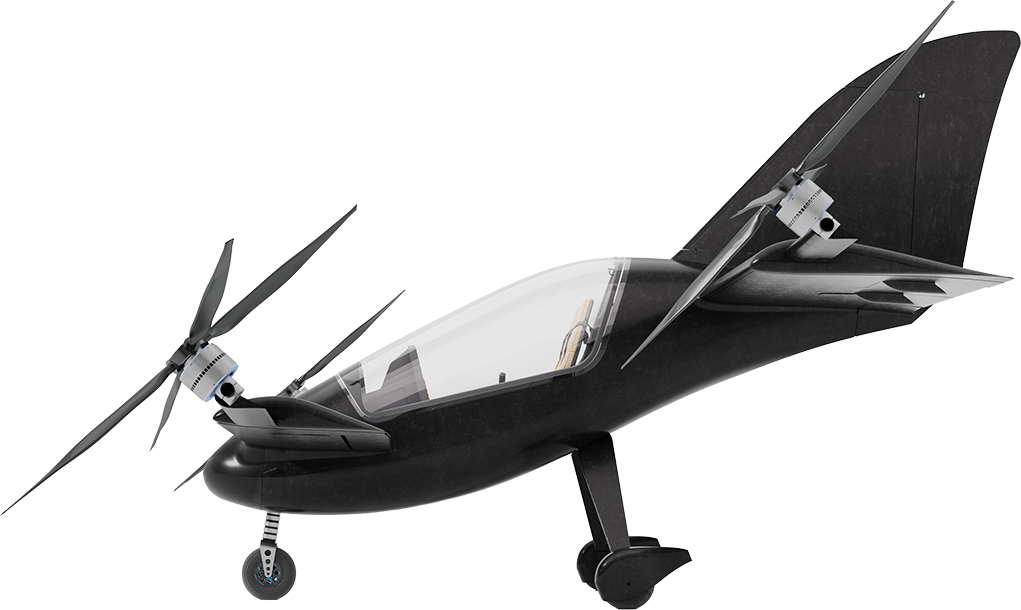
What is the Skyfly Axe?
It’s a 2-seat all-electric aircraft that is designed to enable both conventional, and vertical, takeoffs and landings. It was designed to conform to the FAA's new MOSAIC Light-Sport Category Aircraft framework. And it can fly efficiently as a wing-borne aircraft in forward flight using a dual-wing architecture.
Is the plan for Axe to qualify as a Light-Sport Category Aircraft under the FAA’s new MOSAIC rules?
Yes. The FAA’s new MOSAIC certification regulations are effective as of July 24, 2026. The new Light Sport Aircraft Category conformity & airworthiness rules are expected to be published shortly thereafter. Based on those rules, Skyfly will then generate a Statement of Compliance (SOC) for each individual Axe and it remains the FAA’s responsibility to provide an Airworthiness Certificate.
Key elements of Skyfly’s compliance assurance plan will include:
• Regular training on the certification requirements for our compliance team.
• Thorough development and documentation of our quality assurance system.
• Documentation of evidence of compliance with each applicable compliance standard.
• Rigorous and regular internal audits to verify compliance.
What is the range of the Axe VCA?
The Axe has an estimated maximum range of 100 miles which translates to approximately one hour of flight at 100 mph cruise speed. At the efficient cruise speed of 55 mph, the estimated maximum time aloft is approximately 1 hour and 20 minutes.
What is required to fly the Axe?
Good news for US pilots: the FAA's new MOSAIC rule (Modernization of Special Airworthiness Certification), creates a pathway for the Axe to be certified as a Light Sport Category Aircraft.
Current FAA-certificated Private and Commercial pilots are expected to be eligible to operate the Axe after completing required model-specific training and receiving the required endorsement from an FAA certified flight instructor.
What makes it safe?
Safety is intentional. It’s designed in, at every level. The Axe is powered by eight electric motors, two at each corner, providing redundancy in powered flight and hover. The flight control system is triple-redundant.
Importantly, the Axe was designed to glide. The dual wing configuration provides stable lift so that when power is reduced to idle or even turned off completely, the pilot may glide to land conventionally, a capability that will be immediately familiar to any fixed-wing pilot. Axe uses mechanical linkages to the flight control surfaces, so that even with the power turned off, controlled flight is enabled in a glide.
The Axe utilizes an inherently stall-resistant dual-wing configuration that contributes to both safety and efficiency. The forward wing is designed to reach its maximum lift capability before the main wing. This naturally encourages the aircraft to lower its nose before a full stall can develop. And unlike traditional legacy tail-downforce aircraft designs, both wings contribute positive lift, improving range and payload capability.
The battery system is fully redundant: if one battery cluster is disconnected, the other takes over seamlessly. And as a final backup, the Axe is equipped with a ballistic parachute system, activated via a cockpit lever that ejects the parachute to open clear of the aircraft.
How is the Axe different from other eVTOL aircraft?
True fixed-wing flight. The Axe is designed to fly much like a traditional airplane. This makes the aircraft more familiar to existing pilots and supports straightforward pilot training and transition. The Axe's design provides flight profile optionality: The option to use a conventional runway roll for efficiency or a vertical takeoff for flexibility. Most eVTOLs are capable of sustaining a hover, but energy-inefficient and limited in range due to their lack of wing-bourne lift. That's why the Axe has 2 wings and can achieve 100 miles of range where most eVTOLs struggle to reach 25.
Mechanical flight controls. Unlike fly-by-wire-only aircraft, the Axe designed mechanical linkages to its control surfaces. This means that even with power at idle or off, the aircraft is controllable in a glide. This is a key safety differentiator that any fixed-wing pilot will appreciate.
No tilting or rotating mechanisms. Tilt-rotor and tilt-wing designs introduce significant mechanical complexity, weight, and maintenance burden. The Axe achieves vertical takeoff and fixed-wing cruise without any rotating nacelles or pivoting wings, reducing component and maintenance costs while increasing dispatch reliability.
Can the Axe be used for pilot training?
Yes. One of the unique advantages of the Axe is its ability to combine conventional fixed-wing flight with vertical takeoff and landing operations.
As advanced air mobility aircraft become more common, pilots will need practical training in areas such as vertical operations, energy management, electric propulsion systems, and transition procedures. The Axe provides these capabilities while retaining the familiar handling characteristics of a conventional airplane.
This combination is expected to make the Axe an attractive platform for flight schools, training organizations, and private owners seeking experience with next-generation aircraft technologies.
Specific training applications will depend on the aircraft's final certification basis and regulatory approvals in each country.
Where can I operate my Axe?
Like other aircraft in the USA, the Axe is expected to be able to operate throughout the National Airspace System wherever the pilot's certificate, ratings, endorsements, airspace privileges, and operating rules permit.
The Axe is designed to operate from airports, private airstrips, and other approved landing sites. One of the advantages of vertical takeoff and landing capability is the potential to access locations that may not be practical for conventional fixed-wing aircraft.
In the United States, operations from private property may be possible with landowner permission, subject to applicable federal, state, and local regulations, including zoning, noise, and safety requirements. However, pilots should be aware that local and state zoning laws vary significantly and can restrict operations in populated areas, regardless of FAA rules. Before operating from any off-airport location, check your local municipality's zoning ordinances and any HOA restrictions. The most straightforward operating environments are typically rural properties, agricultural land with owner permission, and private airstrips.
As advanced air mobility infrastructure develops, Axe owners are also expected to gain access to dedicated vertiports and other facilities designed specifically for electric aircraft operations.
Where can I charge my Axe?
You can charge in your hangar or at home on the same type of dedicated circuit used for electric car charging. The fast charger included with the aircraft brings the battery from 0% to 100% in approximately 4.5 hours, or from a typical post-flight state of ~20% charge to full in around 3.5 hours.
As electric aviation infrastructure expands, charging options are expected to become available at an increasing number of airports, vertiports, and aviation facilities.
Is it a helicopter?
No, it’s better. Like a helicopter, the Axe is capable of vertical takeoff and landing, but is all-electric so it’s very quiet. The Axe designs in safety redundancy with 8 motors powering 4 propellers to enable vertical flight, and it also has a dual-wing canard architecture to enable conventional rolling takeoffs and a highly efficient cruise flight profile.
Is it an airplane?
No, it’s better. The Axe can takeoff, cruise, glide, and land like an airplane, but also has vertical takeoff and landing capability. Instead of 1 propeller on a conventional airplane, Axe has 4, and instead of 1 motor on a conventional airplane, Axe has 8. Flight profile optionality allows the pilot to choose an efficient conventional runway roll or immediate vertical takeoff capability.
Will I Need a Traditional FAA Pilot's License to fly in the USA?
Yes. The Axe may be operated by Private and Commercial Pilots. Existing FAA licensed pilots are expected to be eligible to operate the Axe after completing the required model-specific training and receiving the required endorsements from an FAA certified flight instructor.
What is “Flight Profile Optionality”?
Flight Profile Optionality means that the Axe can be operated either as an efficient fixed-wing aircraft using a runway, or it can take off and land vertically when vertical operations are advantageous. Axe gives pilots a choice. This flexibility allows a single aircraft to support a wider range of missions and operating environments.
Get in touch.
Press enquiries: press@skyflytech.com
General enquiries: aircraft@skyflytech.com
Sales enquiries: sales@skyflytech.com
Investors: investors@skyflytech.com
Careers: hiring@skyflytech.com
Direct Line: 020 8135 0500
